About Project
Aurik was built out of two motivations: a genuine curiosity about how OAuth actually works under the hood — inspired by the ubiquitous "Sign in with Google" button — and a practical desire to stop rewriting authentication for every new project. Rather than reaching for a third-party service, the goal was to build a self-hosted auth server once and reuse it across projects through "Sign in with Aurik."
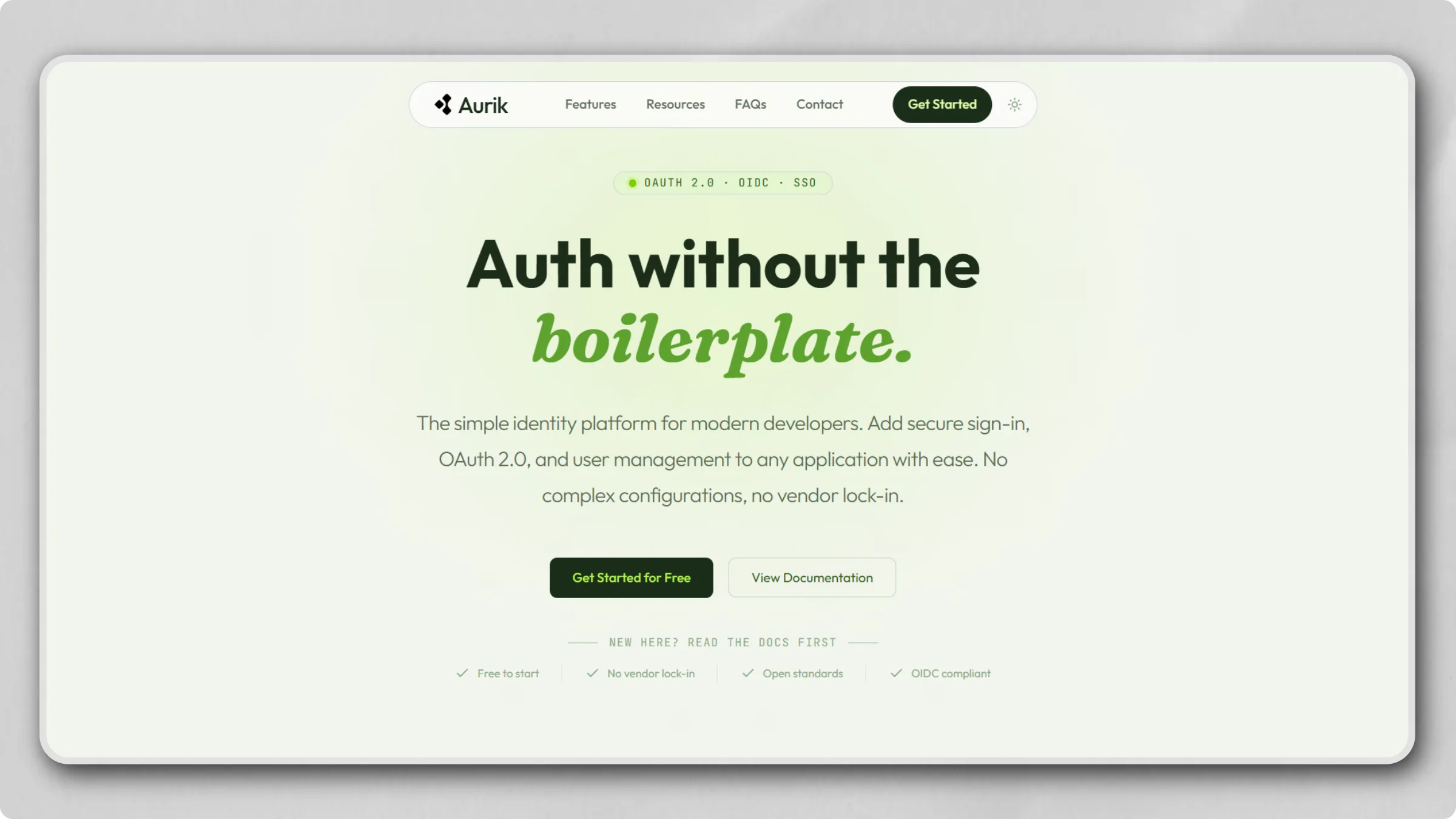
Aurik is an open-source OIDC-compliant identity platform implementing the full OAuth 2.0 specification — authorization code with PKCE, token exchange, UserInfo endpoint, and OIDC discovery on a dedicated Express auth service with SSO support.
It is designed as a monorepo with a shared Prisma schema and a published @aurik/sdk for both React SPAs and Express SSR apps, alongside a Next.js dashboard for profile management and a developer console for OAuth client registration, scope consent configuration, email verification, and password reset.
Security is built in at every layer — RS256 JWTs with JWKS key discovery, rotating signing keys, refresh token rotation with reuse detection, bcrypt password hashing, and Zod-validated request payloads across all endpoints.
Challenges
- Building the @aurik/sdk required designing a clean abstraction that shields developers from the complexity of OAuth handshakes, while supporting both SPA and server-to-server integration patterns out of the box.
- Preserving OIDC authorization parameters across the multi-step redirect flow — from authorization through sign-in, consent, and callback — without losing state between hops demanded careful session and parameter design.
- Handling public key rotation was a deliberate architectural decision — giving app admins control over the key lifecycle while ensuring tokens remained verifiable and reliably refreshed at every stage.
- The deepest challenge was internalizing the full OAuth 2.0 specification: understanding the purpose and interplay of JWKS endpoints, scopes, PKCE, and compliant signing algorithms like RS256 before writing a single line of auth logic.
Tech Stack
 Turborepo